

11·
15 days agoWow, Miez has a gorgeous home, with plenty of space to play and look down on others from above! So nice of her to let you live there!
Vielen Dank!
Wow, Miez has a gorgeous home, with plenty of space to play and look down on others from above! So nice of her to let you live there!
Vielen Dank!
A møøse ate all of my pøtatoes
And then I go back inside and have a whiskey

Oh, I thought you were a newbie; you’re an expert! I never really read much of the comics or YA novels either, except for Dark Empire, because I was tired of references to the revived Emperor that I didn’t understand.
The X-Wing books are great, but take place in a few spots in-between the other books, so that’ll be a fun revisit of older stories. The New Jedi Order is a re-envisioning that is over a massive number of books, but feels like every book goes so fast or has major consequences. Be prepared to be upset about characters you might love, but I think it’s close to the peak. I believe the many authors got together and plotted out the whole thing before it started, which is nice. What comes after is okay, but I think they knew Disney was buying by that point, so there’s not a great “ending,” even if some novels are still delightful. Also, if you haven’t read some of the Tales books, like Tales of the Bounty Hunters, those are fun (mostly) self-contained stories you can hit in-between the main novels.
Man, I wonder if I should start a full reread. I’m sure I’ve forgotten so much that I would still be surprised by plots.
I still own and occasionally re-read some of the Star Wars Expanded Universe (EU) novels, which are relabeled to the non-canon “Star Wars Legends” now. IMO, they’re so much better than the direction the Disney canon went. Since they’re by so many different authors, the quality varies wildly, but I’d say my favorites are Timothy Zahn, Michael Stackpole, and maybe Kevin J. Anderson. But some other individual books or trilogies are great, too. The whole thing is huge, but frankly just fun serialized reads, so not too difficult to get into.
Truce at Bakura kind of kicks off the whole thing, but the best intro is the trilogy by Timothy Zahn, which starts with Heir to the Empire. There’s a few books in-between Truce and Heir if you want, like The Courtship of Princess Leia and the excellent X-Wing series, but I think the Zahn trilogy really sets the bar high for everything. If you’re interested in following up, that’s where I’d go next, and then you can go back and fill in the others if you wish. One of the issues with the EU is that while you don’t need to read every book/comic, they do form a continuity, so it can be mildly confusing if you read a reference to something you haven’t read about yet.

The evidence around field sobriety tests seems to be horribly mixed based on the source, but it kind of seems like the consensus is that while they might be decent, the false positive rate is horrendous, especially for something that can have a terrible penalty (both criminally and socially).
When I was younger, I had a really strong opinion about drunk drivers and how they were menaces and awful people. But today, I’m a lot more forgiving, both because a ton of people are wrongfully charged and even can be convicted (sometimes even of a lesser offense), but also because I’m so much more skeptical of police officers now. Plus with the one guy I know that actually was drunk driving and got a DUI, he says he totally deserved it and completely changed his drinking habits. But that was over 20 years ago, no one was hurt (no crash, just pulled over), and he still isn’t allowed to drive past 10pm, still has a mandated breathalyzer on his car, and can’t go to Canada. Complete overpunishment.
Every time I see a Swords Comic, I think, “They have to be running out of things to do, right?” I mean, how many ideas around swords can you have?
But Garfield has been around approximately 300 years just making jokes about a fat cat. But they usually suck now, and that makes me sad.
But then I remember that Dinosaur Comics has done over 4,000 comics with the exact same panels every time, and whenever I find time to check it out, I always laugh. So I guess that makes me happy, because if you’re funny and clever and talented, you can keep it up. Thank goodness for talented creators. Not sure why I went into this rant here on a random Saturday, but probably nostalgia. Anyway, thanks for posting.
This is utterly adorable! Such a dapper gentleman you have!
What is this scene? Vaggie looks like she’s on a pirate ship! Maybe from when she’s singing the duet with Camilla in season 1? Whatever it Takes I think? I’m just trying to remember why she would be on a pirate ship, but sometimes the animation goes by so fast I miss things
The Dresden Files are all fun reads! The audiobooks are particularly good too, with James Marsters doing a wonderful job!
I’m finishing up Rhythm of War in the Stormlight Archive series. It’s my first foray into Brandon Sanderson, and I’m enjoying it so far, but there’s so much that I don’t know how into the Cosmere I’ll end up going. On the non-fiction side, I’m reading Nate Silver’s On the Edge and trying to work my way through my third (maybe fourth?) reading of Gödel, Escher, Bach by Douglas Hofstadter, which I always grasp a little bit more of each reread.

Yes to the filibuster, no to the quorum. Although I think you might be using quorum incorrectly. If you mean these as 1 question, about simply removing the filibuster and setting the minimum threshold for passing a bill to 50 votes, then that happens automatically, although it’s actually 51 votes without a tiebreaker.
Answer here, my personal opinions below. The filibuster is a Senate rule, not a law, and can be changed by a simple majority vote of the Senate. It does not require approval by the house or president. Changing or creating exceptions to the filibuster has been done several times over the years, from budget acts to disapproving actions of the executive branch. More recently, it has been removed for approval of federal judges. Harry Reid, a Democrat Senate Majority Leader got rid of the filibuster for approving federal judges, not including Supreme Court justices. Republican Mitch McConnell followed up a few years later by removing it for SC justices.
Without the filibuster, any business (well, almost any) such as approvals, bills, etc. requires a simple majority of Senators voting, assuming they have a quorum. If there are no absences or vacancies or abstentions (Senators there but not voting), that’s 100 Senators, so 51 votes needed. If there are only 95 Senators voting, you would only need 48 votes (half of 95 is 47.5, so 47 would not be enough). If there is a tie (50-50, for example), the Vice-President (technically acting as the President of the Senate) can break ties, so a bill could only pass with 50 Senators voting yes, rather than 51, if you add in the VP’s vote.
Quorum of the Senate is not a Senate rule. It comes from the Constitution, which says that a quorum is a majority of the full Senate (always 100). Vacancies are not counted. This means at least 51 Senators have to be physically there for any business to proceed. Changing it would require a constitutional amendment.
In my opinion, Harry Reid’s filibuster removal was somewhat understandable, as Republicans really were obstructing judges, but it was nonetheless a political mistake and backfired horribly, opening the door for Republicans to eventually follow-up by removing the filibuster for SC justices and take firm control of the court. Removing the filibuster for ALL business, including laws, would have similar risk. John Thune, the current Republican Senate Majority Leader, has resisted doing so, despite pastor from Trump. I disagree with Thune on almost everything politically, but respect the backbone/wisdom of keeping the filibuster in place. In general, a good rule is “never give yourself political power you wouldn’t want your political opponents to have.” I kind of feel the same way on the quorum question, but I think that’s not exactly what you were asking. No one really has a major problem with quorum rules, excepting rare intentional absences.
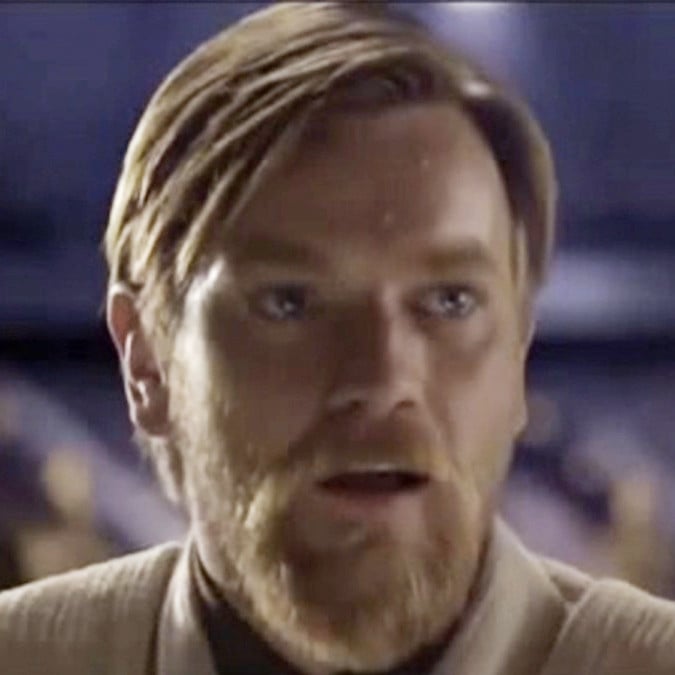
That describes the entire Star Wars Expanded Universe. Every character was critically important to the survival of the galaxy! Some strong books, some weak ones, and its ridiculous storylines all look phenomenal compared to the travesty of Disney canon, IMO
True, but I liked how they referenced Glup in the early Yuu’zhan Vong books by the asking about how he basically was the only reason Tattooine survived the Desolation! Nice nod to previous characters
I had a copy of Fahrenheit 451 as a kid that suddenly had a different book in it for about ten pages or so. I’m like 5 chapters in, and all of the characters change. Same font, same size text, so I was very confused when the next page was talking about some woman cuddling on a couch with a man, and him feeling her shoulders. I figured it out finally by the page numbers being off.
It was part of a romance novel, which probably wasn’t explicit, but seemed spicy to a 10-year-old. I’d think it was a fever dream if my mom didn’t bring it up every so often (“I wrote to the publisher and gave them an earful!”). Anyway, the publisher apologized and sent us a new copy plus some coupons. I wish we’d kept the book, though.
We’re not there yet, but I could see a bit more fear-mongering smashing us into V For Vendetta territory
Wow, just gonna ignore Mr. Mime like that? He was way better for Ash’s mom than Professor Oak!
This is wonderful, and I love how Darth Bane is at the top! In my mind, he’s the real originator of the Sith, despite not being the first. Although all my knowledge is non-canon because of fucking Disney, but regardless, great job!

My dad and I quote this all the time, and no one ever knows what we’re talking about! Peter Sellers is phenomenal!





I have a rule as DM that I will never fudge rolls against the players, but I will fudge rolls in their favor if it fits the narrative. Three players consecutively miss an enemy? Oh no, next turn it got a critical fail and then failed a Dex save, slipping and landing prone. I guess the players get advantage on melee attacks! Don’t do this often, but I’m the right spot it’s fine.
Monsters can just be dumb, too. INT of 6 means those Blobby Blobs are gonna fight poorly, attacking the tank and splitting up attacks. Also, the players don’t know your monsters’ stats, so you can make an attack that would get it to 1 HP instead kill an enemy. I also don’t do this often, but sometimes they just get unlucky, and no reason to TPK.
Speaking of TPK, you can let them fail forward. Monsters rarely have reason to attack downed/unconscious PCs, so let them roll death saves, but it usually takes a while to die. Everyone’s unconscious? Stop combat, no more death saves. Instead, they wake up as prisoners and have to escape. I had a particularly fun one where my players would have died to a trio of night hags (if you’ve played Curse of Strahd, you know the ones). Instead, they woke up and were given a mission, but the bags also stole parts of their “souls,” taking Max HP from one player, speed from another, giving one a trait that they would lose all hope, stealing another’s eye (disadvantage on Perception), etc. Then they had to fulfill the mission, but later came back at a higher level and beat the hags, gaining their souls back. Everyone loved getting revenge!